

By Dan McLaughlin
After many years of research and writing, the light at the end of the tunnel has come into view.
A book on the history of the Irish in Chicago through the lens of the St. Patrick’s Day Parades. The first Parade being a small affair in 1843. It’s a colorful and interesting story that we are all part of and today with four Chicago parades and many suburban parades, the story continues. I thought you might enjoy a look back 150 years to a very colorful St. Patrick’s Day.
1876
The parade and grand balls were planned for another year of impressive tributes to the day honoring St. Patrick, and unity among Chicago’s Irish. Or was it? It wouldn’t be an Irish event if there wasn’t some amount of discord. As with most St. Patrick’s Day parades, past and present, there is always more to the story. And unity was often illusive. A meeting of delegates from the different Irish societies was described in a Chicago Tribune article on February 14, 1876. The purpose of the “convention” was to work out details and finalize arrangements. In addition, they would be electing officers of the United Irish Societies. The convention was held at Maskell Hall at the corner of Desplaines and Jackson streets. First order of business was electing a president. Mr. David Walsh won by a small majority and additional officers were also elected. 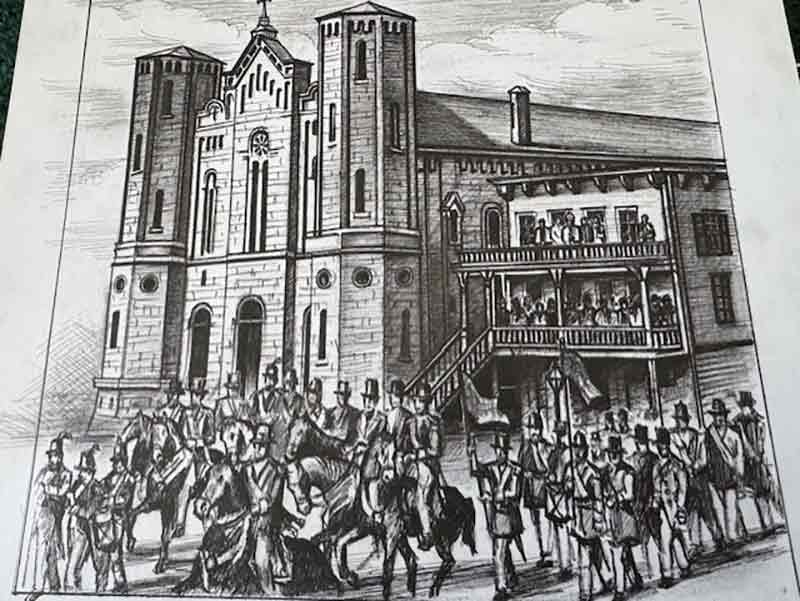
Then it got interesting. There was a motion to adjourn for a week followed by a lengthy discussion described as “useless,” but the majority decided the convention would continue and take up the issue of electing a Grand Marshall for the St. Patrick’s Day Parade. Now, usually Grand Marshall is an honorary position, appointed or named by a committee, many times in recognition for recent service to the community or an action of note. Not In 1876. There were a dozen names nominated. One nominee, Mr. Meeney, was objected to by some delegates because, as a publicly elected official he was not eligible per the by-laws. The objection triggered a vocal reply that the Tribune reported, was followed by “a disgraceful scene.” A reaction of hisses and calls tried to drown out the objectors. If you can imagine a hall with spectators along with 350 delegates joining in, you can imagine quite the confusion and chaos. After things settled down an informal vote was taken on the nominations made earlier and still in consideration. The result was Hugh J. Maguire, Pat O’Brien and M.C. Carroll getting the most votes. A second ballot was required among the three and Hugh J. Maguire came out on top. Although cries were being made for another ballot because of unfairness, the Chair called the decision final and the convention adjourned.
St. Patrick’s Day in 1876 saw a terribly cold and sleet filled, windy day. A Chicago Daily Inter-Ocean article from 3/18/1876, described it as “gloomy and cheerless, with the snow drifting in the key holes of every door.” The day started with high mass at St. Patrick’s Church at 9am. The different uniformed military groups and organizations gave the most impressive appearance. 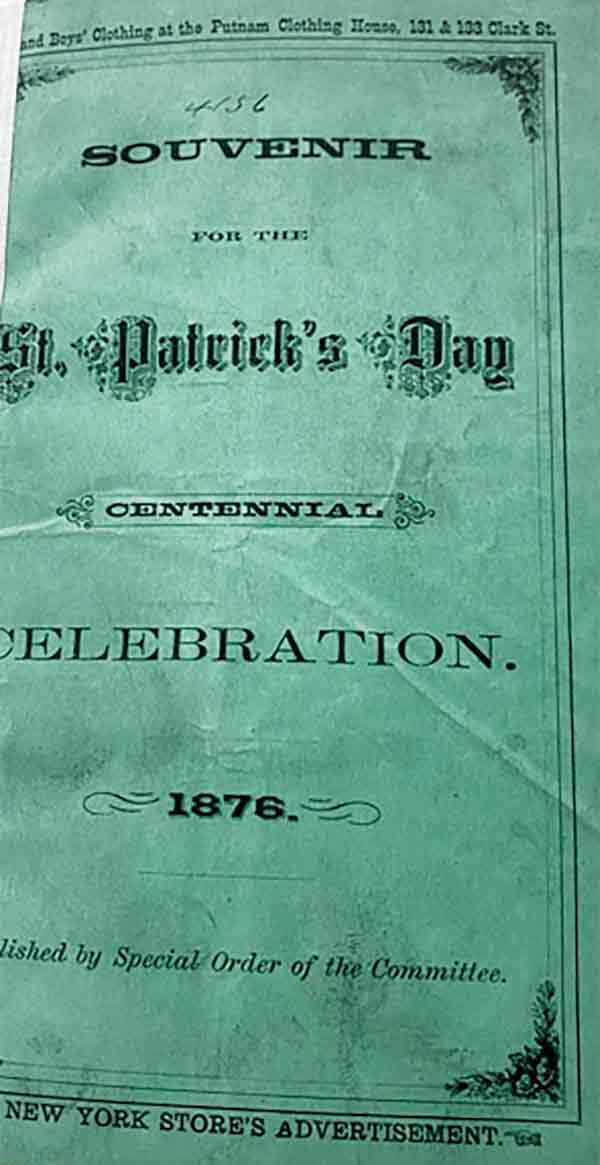
The Grand marshals and their aids pranced around on great steeds with high green plumes attempting to organize the large number of marchers from numerous organizations. A squad of police represented all three divisions of the city led the parade and cleared the way. In addition, a procession of clergy led by two Bishops in gold vestments, numerous priests and deacons, along with close to 100 nuns and Sisters of Charity in their habits, added to the solemn but colorful ceremony. The Second Regiment appeared publicly for the first time in full regimentals, generating thunderous cheers at their colorful and professional appearance.
The Knights of St. Patrick, which were organized within the past year, gave an impressive appearance on their black geldings. The Ancient Order of Hibernian marchers stretched out over almost half a mile and made quite the appearance in their silver edged, green silk sashes and white gloves. They were kept in step by not one or two but three bands within their ranks. Additional marchers from parishes and Irish organizations identified with their colorful banners, fought the chill with ear muffs and their tippets (capes and scarves). The marchers that braved the cold, windy and snowy day gave substance to the opening paragraph of the Inter-Ocean article the next day. “No other Saint in the calendar is the object of such self-sacrificing, devoted worship.”
The evening was full of grand celebrations with at least five of which could be compared to today’s Irish Fellowship Club of Chicago annual St. Patrick’s Day dinner. A very impressive show of interest in celebrating the Patron Saint of Ireland. The 7th Annual Banquet and Ball of the Irish Literary Association at the Sherman House. Second Regiment Military Ball and Clan-na-Gael Guards with no less than 1,500 in attendance with bands in different Parlors of the McCormick Hall. Knights of St. Patrick celebration in a hall at Green and Washington Streets.
The Hibernian Benevolent Society, 25th Annual Ball at Maskell Hall and Turner Hall, and the St. Patrick’s Hibernian Benevolent Society Ball at Central Hall at 22nd Street and Wabash.
What appears to be the only surviving Souvenir Program from an 1876 dinner, is in the files of the Chicago history Museum. The introduction refers to this being the “St. Patrick’s Day Centennial Celebration.” A more appropriate title might be, Celebrating St. Patrick’s Day In the Centennial Year of the United States. I would imagine much reminiscing took place on the role of the Irish in this country’s first 100 years. And it might be worth mentioning a little history as reported in an A&E Television Network story. “The first recorded parade honoring the Catholic feast day of St. Patrick, the patron saint of Ireland, was held in what is now St. Augustine, Florida. Records show that a St. Patrick’s Day Parade was held on March 17, 1601 in a Spanish colony under the direction of the colony’s Irish vicar, Ricardo Artur.
More than a century later, home sick Irish soldiers serving in the English military marched in Boston in 1737 and in New York City in 1762.”
Anyone with interesting, comical or touching stories about any of the current or former St. Patrick’s Day Parades or photos send Dan an email at
Dan McLaughlin is former Irish Fellowship Club President, Parade Committee member, former Mayor of Orland Park ,and guest contributor to the Irish American News.